
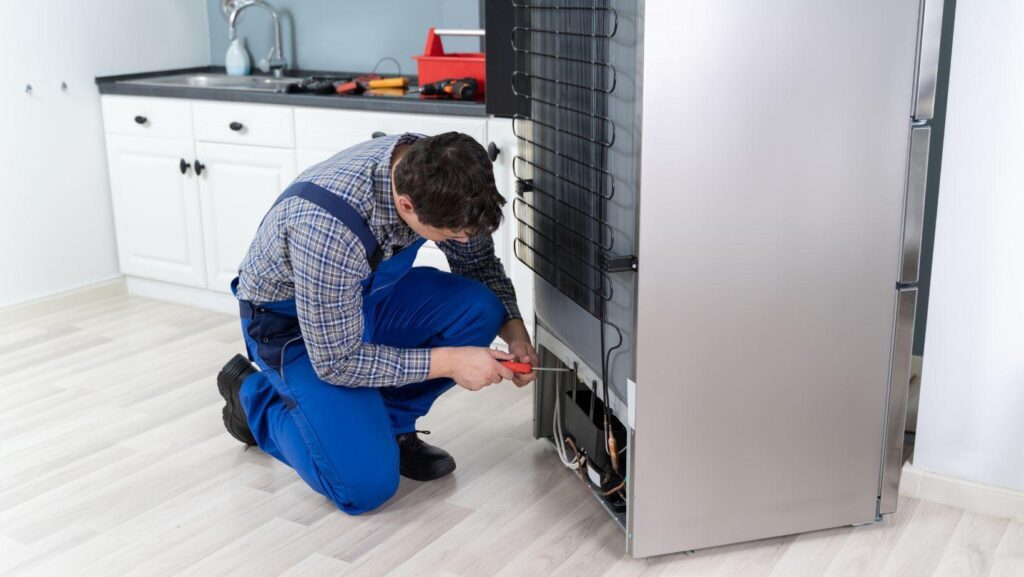
Water around your refrigerator can be alarming, especially when the appliance still appears to be cooling normally. It’s easy to assume the puddle is the result of a recent spill or excess condensation, but recurring moisture often points to a problem that deserves closer attention. In many cases, the leak begins long before the refrigerator shows obvious signs of poor performance.
A small amount of water may seem harmless at first, yet repeated moisture can affect much more than the appliance itself. Flooring, cabinetry, trim, and even the subfloor beneath the refrigerator may gradually absorb water without immediately showing visible damage. Left unresolved, what starts as a simple cleanup can become a much larger home maintenance issue.
This guide explains what homeowners should check first, how to protect the surrounding kitchen, which warning signs deserve attention, and when a recurring refrigerator leak requires professional diagnosis.
Key Takeaways
- Refrigerator leaks should always be investigated, even when the appliance still appears to cool properly.
- The location of the water often provides valuable clues about the underlying issue.
- Repeated moisture can damage flooring, cabinets, trim, and other nearby materials.
- Routine maintenance may help reduce some common causes of refrigerator leaks.
- Recurring leaks, cooling changes, or water near electrical components should be professionally inspected.
Why Refrigerator Leaks Can Become Bigger Kitchen Problems
Finding water on the kitchen floor is rarely just an appliance concern. Moisture has a tendency to spread into areas that are difficult to see, allowing damage to develop gradually before homeowners realize how far the water has travelled. Understanding the potential impact helps explain why even a small leak deserves prompt attention.
Small Leaks Can Spread Beyond the Appliance
Water doesn’t always remain where it first appears. Depending on the floor surface and the layout beneath the refrigerator, moisture can travel underneath the appliance before becoming visible several inches away. This can make the actual source of the leak difficult to identify without careful observation.
Repeated moisture may also reach flooring seams, toe kicks, trim, or the bottoms of nearby cabinets. Simply wiping up the visible water removes the symptom, but it doesn’t solve the underlying cause. Identifying where the leak originates is just as important as cleaning the affected area.
Flooring and Cabinetry Can Be Affected
Kitchen flooring is designed to handle occasional spills, but repeated exposure to water is another matter. Hardwood may begin to swell, laminate edges can lift, and some flooring materials may become discoloured if moisture remains trapped beneath the refrigerator.
Cabinets are equally vulnerable. Water can slowly soak into lower cabinet panels or trim, leading to warping, staining, or persistent dampness that isn’t immediately noticeable. Because much of this damage occurs out of sight, homeowners often discover it only after the leak has been present for quite some time.
What to Check First When You Find Water Around the Refrigerator
Before assuming a major repair is necessary, begin with a few simple observations. The goal isn’t to dismantle the refrigerator or diagnose internal components. Instead, focus on determining where the water is appearing, whether it returns after being cleaned, and whether other symptoms are developing at the same time.
Determine Where the Water Is Appearing
The location of the moisture often provides useful clues about where the problem may be developing. Pay attention to whether the water is-
- In front of the refrigerator
- Underneath the appliance
- Inside the fresh food compartment
- Inside or beneath the freezer
- Near the ice maker
- Around the water dispenser
While the location alone won’t identify the exact cause, it can help narrow down whether the issue is more likely related to drainage, condensation, or the refrigerator’s water supply.
Make Sure the Refrigerator Is Actually the Source
Before assuming the appliance is leaking, consider whether the water may have come from somewhere else. A recently cleaned floor, a spilled drink, nearby plumbing, or even a dishwasher leak can sometimes create moisture that eventually collects around the refrigerator.
Checking nearby sinks, plumbing connections, and surrounding appliances can help rule out other possible sources before focusing entirely on the refrigerator.
Dry the Area and See Whether the Water Returns
Once the area has been cleaned thoroughly, monitor it over the next several hours or days. Notice whether the leak appears continuously or only after certain events, such as the ice maker producing ice, the water dispenser being used, or the refrigerator completing a defrost cycle.
Observing these patterns provides valuable information if further diagnosis becomes necessary and can help determine whether the issue is isolated or recurring.
Kevin recommends drying the area completely and noting exactly when the moisture returns. A leak that appears after using the water dispenser may point technicians in a different direction from one that appears after an ice-making cycle or after the refrigerator enters a defrost cycle.
What a Gainesville Refrigerator Technician Says Homeowners Often Miss
When researching this topic, I spoke with Kevin, an Appliance EMT technician who specializes in refrigerator repair in Gainesville, GA. One observation he shared was that homeowners often concentrate on where the puddle appears instead of determining where the leak actually begins. According to Kevin, the visible water is frequently only the final stage of a problem that has been developing inside or behind the refrigerator for some time.
He also explained that the most useful clues aren’t limited to the leak itself. Frost buildup, excess condensation, inconsistent cooling, problems with the ice maker or water dispenser, and changes in the refrigerator’s normal operating sounds can all help narrow down the underlying cause. Looking at these symptoms together provides a much clearer picture than focusing on the puddle alone.
The Puddle May Not Be Directly Below the Problem
One of the biggest misconceptions is that water always appears directly beneath the faulty component. In reality, moisture often travels along interior panels, tubing, or the underside of the refrigerator before finally reaching the floor.
Because of this, a puddle at the front of the appliance doesn’t necessarily mean the problem started there. Likewise, water collecting near one side of the refrigerator may have originated elsewhere inside the unit. This is why recurring leaks deserve more attention than simply mopping up the visible water.
A Refrigerator Can Still Cool While a Leak Is Developing
Many homeowners assume that if food is still cold, the refrigerator must be working correctly. While cooling performance is certainly important, it doesn’t always reflect the overall condition of the appliance.
Drainage issues, condensation problems, or small water-supply leaks can develop while the refrigerator continues maintaining normal temperatures. Waiting until cooling performance also begins to decline may allow the problem to become more difficult to resolve and increase the risk of damage to nearby flooring or cabinetry.
Other Symptoms Can Help Narrow Down the Cause
Kevin recommends paying close attention to whether the leak appears alongside other changes in the refrigerator’s operation, including-
- Frost building up in unusual areas.
- Excess condensation around shelves or door seals.
- Changes in refrigerator or freezer temperatures.
- Ice maker producing less ice or stopping altogether.
- Water dispenser performance becoming inconsistent.
- New humming, clicking, buzzing, or other unfamiliar operating sounds.
While these symptoms don’t automatically identify the exact failed component, they provide valuable information that can help determine whether the issue is becoming more serious.
Warning Signs That Can Help Narrow Down a Refrigerator Leak
Water on the kitchen floor is often only one part of the story. Paying attention to where moisture appears and what other changes are occurring at the same time can help homeowners better understand the situation before seeking professional diagnosis.
- Water repeatedly collecting beneath the refrigerator- If the area has been dried several times but moisture keeps returning, the leak is likely ongoing rather than the result of an isolated spill.
- Water inside the fresh-food compartment- Pools of water beneath produce drawers or on interior shelves often indicate that moisture isn’t draining as intended.
- Excess condensation around doors or shelves- Persistent condensation may suggest warm air is entering the refrigerator through worn seals or another issue affecting normal operation.
- Frost or ice buildup in unusual areas- Heavy frost inside the freezer or around vents can sometimes point to airflow or moisture-related problems occurring alongside the leak.
- Moisture near the water dispenser or ice maker- Refrigerators equipped with these features have additional water-system components that may require closer inspection if leaks develop nearby.
- Changes in refrigerator or freezer temperatures- If water leaks begin occurring alongside inconsistent cooling, both symptoms should be evaluated together instead of being treated as separate issues.
Protect Your Kitchen While You Investigate the Leak
Until the source of the leak has been identified, protecting the surrounding kitchen should become the immediate priority. Even a relatively small amount of water can affect nearby materials if it remains unnoticed for an extended period.
Dry Standing Water Promptly
Clean up visible water as soon as possible rather than allowing it to remain beneath or beside the refrigerator. After drying the area, check again several hours later to determine whether moisture has returned.
Inspect Nearby Flooring
Look carefully for signs such as swelling, buckling, soft spots, or discolouration, particularly if your kitchen has hardwood, laminate, or other moisture-sensitive flooring. Early detection may help prevent more extensive damage later.
Check Adjacent Cabinetry and Trim
Inspect the lower edges of nearby cabinets, trim, and baseboards for dampness, staining, or changes in appearance. Water often spreads farther than expected before becoming visible.
Know Where the Refrigerator Water Shut-Off Is Located
If your refrigerator has an ice maker or water dispenser, it’s connected to the home’s water supply. Knowing where the dedicated shut-off valve is located can be helpful if a significant water-line leak develops. However, diagnosing or repairing internal water connections should generally be left to a qualified technician.
Simple Maintenance That May Help Reduce Refrigerator Leaks
Not every refrigerator leak can be prevented, but routine inspections and a few basic maintenance habits can reduce the likelihood of common moisture-related problems. These simple checks take very little time and can help homeowners identify small issues before they develop into larger appliance or kitchen concerns.
Inspect Door Gaskets
Door gaskets play a vital role in maintaining a consistent internal temperature. Over time, they can become dirty, cracked, loose, or lose their flexibility, allowing warm, humid air to enter the refrigerator.
Excess moisture entering the appliance increases condensation, which may eventually contribute to water accumulation inside or around the refrigerator. Periodically inspect the entire seal for visible damage, clean away any dirt or food residue, and ensure the door closes firmly all the way around.
Keep Interior Air Vents Clear
Proper airflow is essential for maintaining stable temperatures throughout the refrigerator. When food containers or large items block interior vents, cold air cannot circulate efficiently, creating uneven cooling and excess condensation in certain areas.
Organizing groceries so that vents remain unobstructed helps improve cooling performance while reducing unnecessary moisture buildup inside the appliance.
Check Visible Water Connections
If the refrigerator includes an ice maker or water dispenser, inspect any visible water supply tubing and accessible fittings every so often. Look for signs of moisture, mineral deposits, or small drips that could indicate a developing leak.
Early detection of water-line issues may prevent water from spreading beneath the appliance and damaging nearby flooring or cabinetry.
Keep Accessible Drainage Areas Clean
Many refrigerator models include homeowner-accessible drainage areas that benefit from occasional cleaning. Following the manufacturer’s maintenance recommendations can help reduce debris buildup that may interfere with normal water drainage.
Avoid dismantling internal components or attempting repairs that require specialized tools or technical knowledge. If the source of the leak isn’t obvious, professional diagnosis is usually the safer approach.
When It’s Time to Call a Professional
Basic observation and routine maintenance can help identify straightforward issues, but recurring water often means the refrigerator needs a more thorough inspection. Homeowners should stop troubleshooting on their own when the source cannot be identified, the leak repeatedly returns, cooling performance begins to change, or moisture appears near electrical components.
Persistent Water Leaks
If the area has been dried thoroughly and water continues to return after checking the obvious sources, the focus should shift from repeated cleanup to identifying the underlying cause.
Homeowners who need refrigerator repair in Gainesville, GA can have a technician determine whether the leak is related to the drainage system, water-supply components, ice maker, or another internal part of the appliance. A proper diagnosis helps ensure the real problem is addressed instead of repeatedly treating the visible symptom.
Cooling Problems Alongside the Leak
A refrigerator that leaks while also struggling to maintain consistent temperatures deserves prompt professional attention. Because several different components can create similar symptoms, diagnosing the problem based on cooling performance alone can be difficult without a thorough inspection.
Water Near Electrical Components
Water should never be ignored if it is collecting near electrical wiring, outlets, control panels, or powered components. Moisture and electricity create obvious safety concerns, making this a situation where homeowners should avoid further DIY investigation.
The Source Cannot Be Identified
Water doesn’t always travel in a straight line. It may move beneath the refrigerator or along internal surfaces before finally appearing on the floor. If repeated observation still doesn’t reveal where the moisture originates, a technician may need to inspect areas that aren’t intended for routine homeowner access.
A Simple Routine for Catching Refrigerator Leaks Early
A quick refrigerator inspection every few weeks can help homeowners spot developing issues before they become more serious. Spending just a few minutes checking for moisture and monitoring the appliance’s performance can go a long way toward preventing unnecessary kitchen damage.
- Look for moisture around and beneath the refrigerator.
- Check door gaskets for damage, gaps, or poor sealing.
- Inspect visible water-supply connections if the appliance has an ice maker or water dispenser.
- Keep interior air vents clear to promote proper airflow.
- Monitor refrigerator and freezer temperatures for consistency.
- Pay attention to recurring frost, condensation, water leaks, or new operating sounds.
Final Thoughts
A leaking refrigerator shouldn’t immediately cause panic, but it should never be ignored. The most effective first step is determining where the water is appearing, protecting the surrounding kitchen, and monitoring whether the moisture returns after cleanup.
Routine inspections and preventive maintenance can help homeowners catch many common issues early. However, when leaks become recurring, cooling performance changes, or moisture appears near electrical components, professional diagnosis is the safest course of action. Addressing the problem promptly helps protect not only the refrigerator itself but also the flooring, cabinetry, and other parts of the kitchen that water can quietly damage over time.
FAQs
Why is water pooling underneath my refrigerator?
Water beneath a refrigerator can result from several different causes, including drainage issues, condensation, water-supply components, or other internal systems. The location and timing of the leak often provide useful clues about the underlying problem.
Why is there water inside my refrigerator?
Interior moisture may be associated with drainage problems, excess condensation, restricted airflow, or sealing issues. If water continues to appear after being cleaned, it should be investigated rather than repeatedly wiped away.
Can a refrigerator leak damage kitchen flooring?
Yes. Repeated exposure to moisture can affect flooring seams, trim, subflooring, and moisture-sensitive materials, especially if water remains hidden beneath the appliance for an extended period.
Can the ice maker or water dispenser cause a refrigerator leak?
Yes. Refrigerators equipped with these features have additional water-supply tubing, fittings, and related components that should be considered when diagnosing a leak.
When should I call a professional about a leaking refrigerator?
Professional diagnosis is recommended if the leak repeatedly returns, the source cannot be identified, cooling performance changes, or water is appearing near electrical components.